




Who we are
Fostering the development of bamboo plantations in Central America
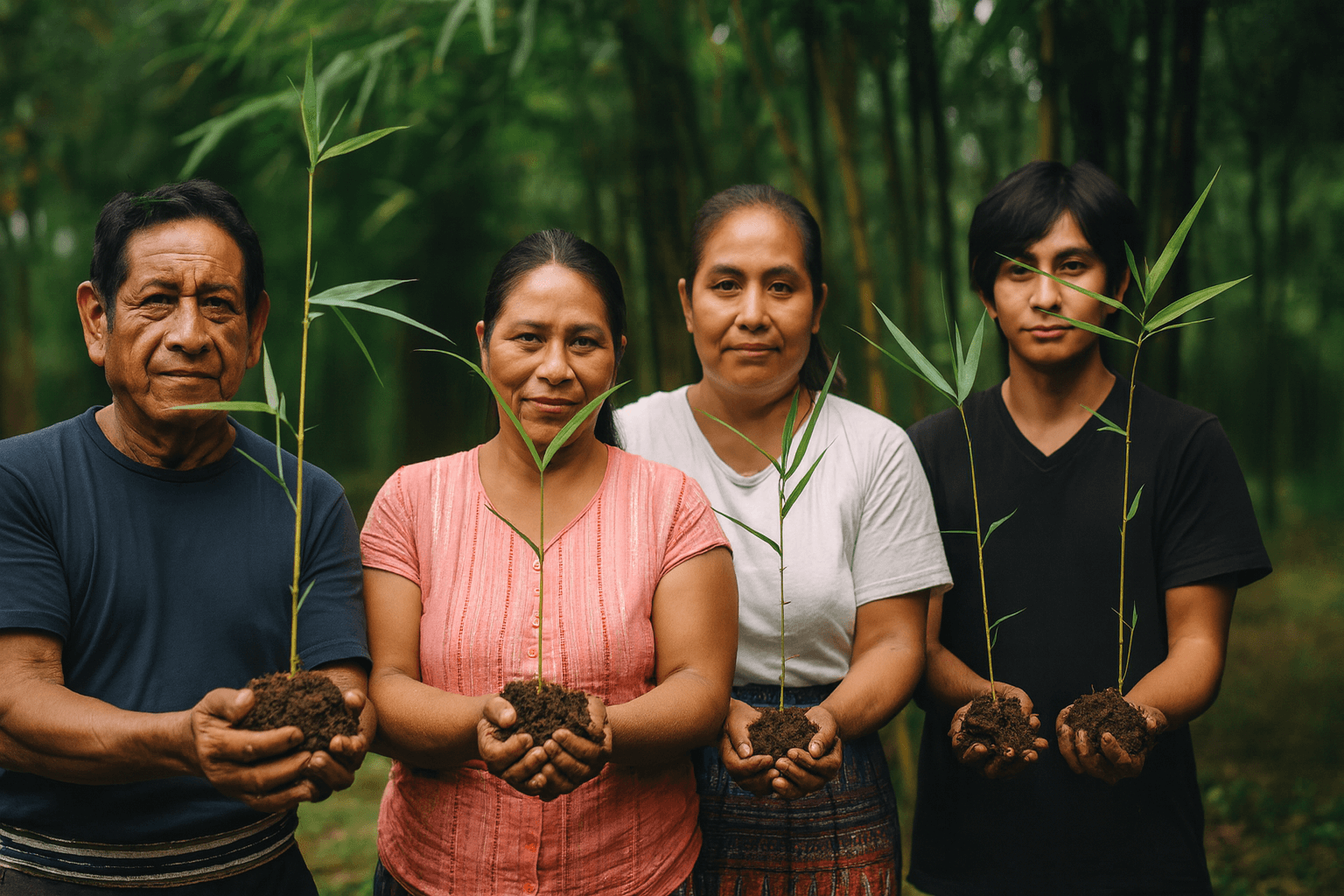
We work with local communities in Central America to develop bamboo plantations, generating high quality carbon credits that benefit both the environment and local communities.
We are helping these communities become producers of two commodities: carbon sequestration and 21st century building material.
Let's change our future with bamboo!
Regionally, bamboo can capture up to 35-40% of Central America's annual emissions if 10% of degraded land is cultivated.
Projects
Projects that restore land and transform communities
From the southern coast to the Guatemalan Caribbean, each XO2 plantation captures carbon, regenerates soils and improves lives. These projects reflect our commitment to sustainability, innovation and local development.
Las Chatias Farm, Santa Rosa (Chiquimulilla)
Size: 2 ha
Previous use: Cane
Status: Existing plantation.
Projects of Andrés Herrera, Petén
Farms in San Andres, Santa Ana, Melchor de Mencos, Solano
Size: Total 300 ha
Current use: Livestock, forests and lagoon with water sources.
Status: Planting in planning
Diego Aguilar, Gualan (Zacapa)
Area: 50 ha
Current use: Pasture and cattle.
Status: Existing plantation.
Transparency and Verification
How it works
XO2 uses geospatial tools to monitor bamboo plantations and carbon sequestration in real time. Buyers can easily verify the impact of carbon certificates.
01. We register properties for your certification process
Eros parturient ut sem lobortis mus pretium dapibus. Venenatis egestas dolor laoreet.
02. We supervise the evaluation and preparation of the site
03. We lead the planting and follow up on the care of the Bamboo crop.
04. We support in the planning of the irrigation system.
05. Guidance on sustainable management practices
06. We recommend actions for diversification with secondary crops
07. We coordinate crop monitoring and evaluation
08. We trade carbon credits in international markets.
Why join us
Supports projects
of XO2 registering your property
or by purchasing carbon credit
The XO2 team works directly with local communities, promoting inclusive and sustainable development.
Purchase Offset
Offers Land
Sponsor
Volunteer
Allies who share our vision
We collaborate with global organizations, local communities and visionary companies committed to sustainability, climate action and inclusive development.
More communities, more impact
Bamboo captures up to 80 tons of CO2 per hectare per year, helping to reduce emissions and combat climate change in a sustainable way.
Bamboo revitalizes ecosystems and enhances biodiversity, contributing to environmental regeneration.
Through the use of bamboo, it promotes biodiversity, improves soil health and enhances environmental resilience.
Local development is promoted, creating sustainable economic opportunities and encouraging responsible resource management practices.
Words from the Community
Real stories of people who are regenerating their land, creating opportunities and building a greener future together with XO2.
Thanks to XO2, my farm went from being a cane degraded land to a bamboo forest that breathes life. Today, the land is healthy and gives us hope again.

Stories that inspire action

XO2: del carbono al territorio, construyendo la cadena de valor del bambú
La iniciativa Guatemala–Taiwán confirma el potencial del bambú como activo climático. XO2 propone ir más allá: construir una cadena de valor completa donde carbono, regeneración territorial e industria se articulan en una nueva bioeconomía.

¿Colapso o maduración? El futuro del carbono visto desde XO2
El mercado de carbono no ha colapsado: está madurando. Entre la crisis del mercado voluntario y el fortalecimiento de los sistemas regulados, emergen proyectos basados en remociones reales, trazabilidad y regeneración territorial. XO2 propone una vía distinta desde el bambú y la bioeconomía.

XO2: del carbono al territorio, construyendo la cadena de valor del bambú
La iniciativa Guatemala–Taiwán confirma el potencial del bambú como activo climático. XO2 propone ir más allá: construir una cadena de valor completa donde carbono, regeneración territorial e industria se articulan en una nueva bioeconomía.